The date changes the purchasing conversation.
Since 12 August 2026, Regulation (EU) 2025/40, usually called the PPWR, has introduced specific PFAS concentration limits for food-contact packaging placed on the EU market. The commonly referenced thresholds are 25 ppb for any individual PFAS by targeted analysis, 250 ppb for the sum of targeted PFAS, and 50 ppm for PFAS including polymeric PFAS, with additional documentation where total fluorine exceeds 50 mg/kg.
The important shift is not another line on a certificate. It is that buyers and suppliers need to discuss the exact material, the test scope and the target market together.
“No intentionally added PFAS” is not the same as a finished-product result.
A paper food-contact product has a supply chain: pulp, sizing, functional coating, ink, processing aids, converting and the finished article. A supplier declaration can be useful, but it does not answer every question about what is present in the final material.
For a purchasing discussion, ask what was tested, which PFAS were included, whether total fluorine was measured, which layer was sampled, when the sample was produced and which laboratory performed the work. A short marketing phrase should not replace those questions.
The hidden detail is inventory.
The European Commission guidance highlights a practical distinction: packaging already placed on the EU market before 12 August 2026 is not automatically withdrawn simply because the date has arrived, while packaging first placed on the market after that date must meet the applicable limits. There is no general stock-exhaustion assumption that makes every earlier-produced item automatically acceptable.
That turns a laboratory question into a purchasing, warehouse and supply-chain question. A product manufactured in June but first placed on the EU market after 12 August still needs to be assessed against the rules that apply to that placement.
A paper straw still needs an application-specific answer.
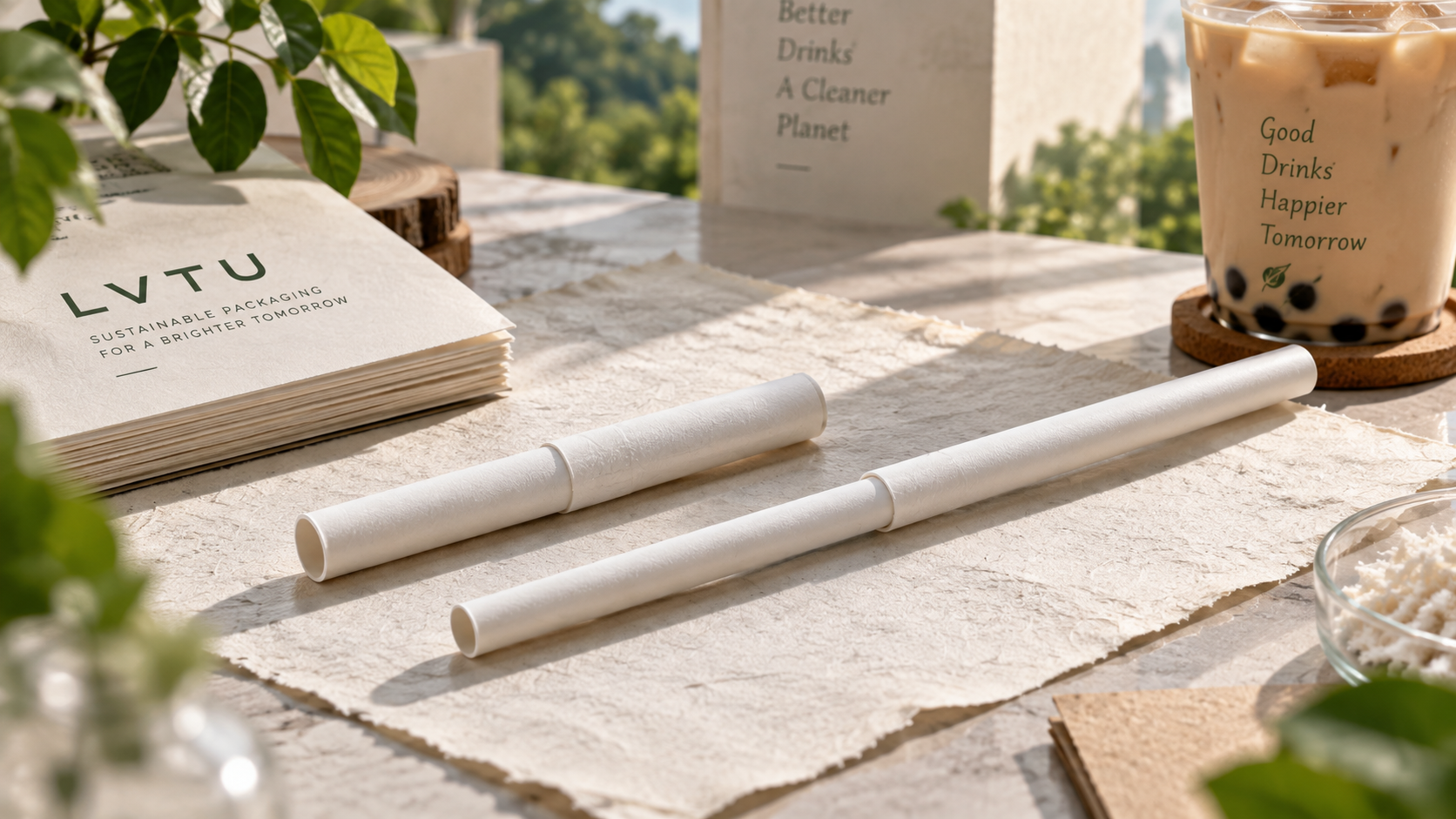
A paper straw is a food-contact article, but whether a particular straw falls within the PPWR packaging definition can depend on how it is supplied, attached and used. An individually supplied straw, a straw attached to a beverage carton and an integrated retail pack may create different questions.
That is why LVTU avoids the blanket sentence “everything we sell is PPWR compliant”. The useful conversation names the configuration, destination market, paper and coating system, and the evidence available for the finished article.
Fluorine-free should not mean performance-free.
Removing PFAS is only half of the engineering task. Paper still needs to hold food, resist grease or moisture where required, and stay functional for the intended serving time. Barrier coatings exist because cellulose is naturally hydrophilic and untreated paper has limited resistance to water, grease and gases.
The harder question is how to remove chemistry we no longer want while preserving the performance customers still need. That is where material design, coating development and project testing have to meet.
Better evidence is more useful than more certificates.
When reviewing a PFAS document, start with the sample description, test method, detection limits and date. Then compare that sample with the product actually being sold. A polished PDF cannot make two different materials become the same material.
The next generation of sustainable paper products will not win because a green leaf is printed on the pack. They will win when the documentation and the actual product tell the same story. Not more certificates—better evidence.