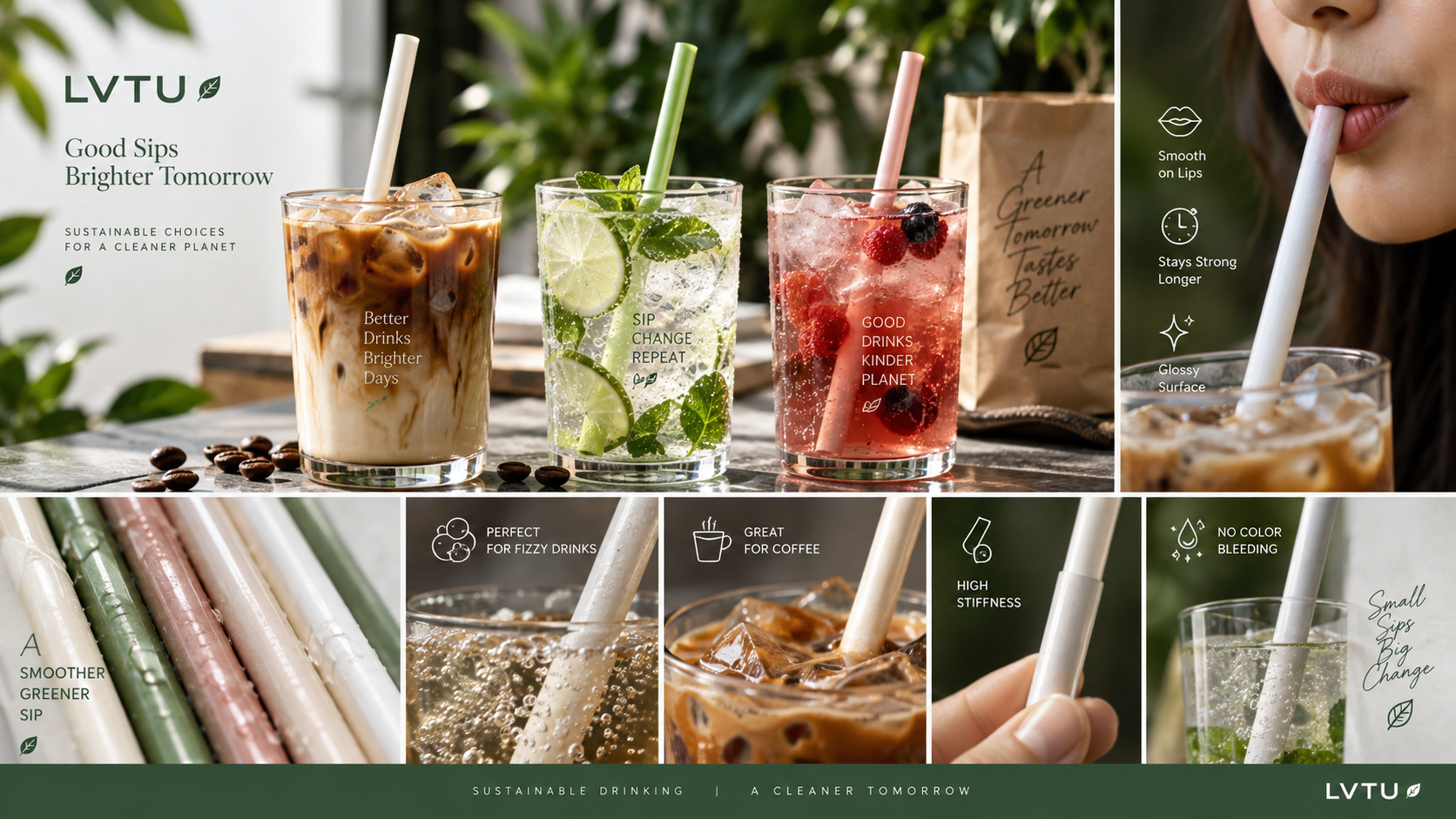
The first thing I noticed was actually the lips.
A cup can look premium and the drink can be well made, but the straw is the part that repeatedly touches the customer. When an ordinary paper straw becomes rough, sticky or visibly tired during use, the drinking experience changes quickly.
A suitable water-based coating can give the surface a smoother feel and help slow direct liquid penetration into the paper. The goal is not to make paper pretend to be plastic, but to make the paper component feel deliberate and comfortable.
The real question is how slowly the straw softens.
Paper and liquid naturally interact. A responsible description should not promise that paper is permanently unaffected by liquid. The practical question is whether the straw stays functional for the intended drinking time under the defined beverage and temperature conditions.
When a coating slows moisture penetration, the paper structure may keep its usable stiffness for longer. That is the test that matters: not whether paper defeats water forever, but whether the straw stays useful for the life of the drink.
Coffee and carbonated drinks are the interesting tests.
Plain water is easy. Coffee brings color, temperature and oils. Carbonated drinks bring bubbles, acidity and longer contact with liquid. Strongly coloured beverages can quickly reveal whether the surface is absorbing color or softening too fast.
A meaningful evaluation names the actual beverage, serving temperature, expected time in the cup and the acceptance criteria. Those are project tests, not universal claims.
A refined surface can support a more finished pack.
A straw sits directly in front of the customer. A subtle, controlled surface finish can look cleaner and more consistent while remaining part of a paper-based product system.
A little gloss is not about making paper look like plastic. It is about making the component feel intentional and appropriate for the beverage brand using it.
Sustainability should not mean a worse experience.
The more interesting challenge is not only replacing plastic. It is making the sustainable product good enough that the customer stops thinking about what it replaced: smoother feel, slower softening, better stiffness and more stable performance in demanding drinks.
That is the direction LVTU cares about. We do not want customers to tolerate paper because it is environmentally friendly. We want them to take a sip and simply think: this straw feels good.